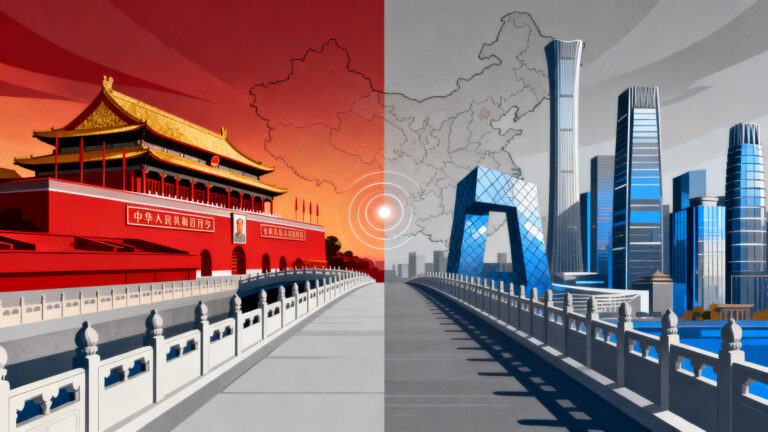
Beijing is not merely a city; it is the command center of a superpower. While Shanghai may claim the title of the financial engine and Shenzhen the technological hub, Beijing stands alone as the brain and the soul of the People’s Republic. It is here, amidst the juxtaposition of ancient imperial palaces and stark modernist government buildings, that the trajectory of the world’s second-largest economy is determined. For anyone looking to understand China—whether for business, geopolitics, or cultural appreciation—all roads eventually lead to this sprawling metropolis on the North China Plain.
To view Beijing simply as a tourist destination is to miss its fundamental purpose. It is a city designed for administration, control, and the projection of power. From the layout of the Forbidden City, which places the emperor at the center of the universe, to the Great Hall of the People where the Communist Party charts its course, the architecture itself speaks the language of authority. However, beneath this rigid exterior lies a city of immense complexity, grappling with demographic shifts, economic duality, and a cultural renaissance.
The Geography and People of the Capital
Located in northern China, surrounded by mountains to the west and north which historically protected it from nomadic incursions, Beijing serves as the strategic anchor of the nation. It covers a massive area of over 16,000 square kilometers, making it more of a province-sized municipality than a city in the European sense. This geography has always been political; it connects the agricultural heartland with the northern frontiers.
A Demographic Turning Point
The inhabitants of Beijing, known as Beijingers, are living through a historic demographic shift that mirrors the wider crisis facing China. Recent data reveals a stark reality: the national birth rate has plummeted to a record low of 5.63 births per 1,000 people. Even with the abandonment of the one-child policy over a decade ago, the high costs of education and living in top-tier cities like Beijing have deterred families from growing.
The population is not just shrinking; it is aging rapidly. By 2050, it is estimated that over half a billion people in China will be over the age of 60. In Beijing, you can see this shift on the streets. The government has responded by gradually raising the pension age—a significant social change for a workforce accustomed to retiring early. Over the next 15 years, the retirement age for men will rise to 63, and for women, up to 58. This demographic pressure creates a unique atmosphere in the capital: a city racing to modernize its economy before its workforce grows too old.
The Political Heart: Where Global Decisions Are Made
The primary function of Beijing is politics. It is the seat of the Communist Party of China (CPC) and the home of President Xi Jinping. Understanding the political mechanics here is essential for grasping global geopolitical transformations.
The “Two Sessions” and the Consolidation of Power
Every year, the eyes of the world turn to Beijing for the “Two Sessions”—the plenary meetings of the National People’s Congress (NPC) and the Chinese People’s Political Consultative Conference (CPPCC). While officially these bodies are legislative and advisory, in practice, they serve as a stage to signal the Party’s direction. Recent sessions have underscored a clear trend: the centralization of power around President Xi Jinping. Government reports attribute economic successes and strategic direction almost exclusively to his leadership, reinforcing his position at the apex of the political structure.
This centralization affects everything from domestic policy to international relations. The rhetoric emerging from Beijing has shifted. While the official discourse still speaks of a “peaceful rise” and “non-interference,” the reality observed by geopolitical analysts is one of assertive pragmatism. Beijing is no longer content to follow rules set by the West; it aims to reshape centers of global influence.
Global Strategy and Foreign Policy
From the offices in Beijing, a complex foreign policy is orchestrated. The strategy is a paradox: projecting power while seeking to avoid direct military conflict. This is evident in how Beijing navigates its rivalry with the United States. With political shifts in Washington, including the return of Donald Trump to the US presidency, Beijing has adopted a calculated approach. It seeks to exploit transatlantic tensions, presenting itself to Europe as a stable, reliable economic partner in contrast to a volatile Washington.
Furthermore, Beijing’s influence stretches far beyond its borders through the Belt and Road Initiative. In the Middle East, for example, China is not just buying oil; it is building overland corridors through Iran to diversify trade routes and reduce reliance on maritime chokepoints like the Strait of Malacca. In Latin America and Africa, Beijing positions itself as an alternative development partner, focusing on infrastructure and trade rather than the political conditionality often attached to Western aid. This strategy is designed to build long-term geopolitical leverage, challenging the traditional international order without firing a shot.
Economic Duality: Innovation vs. Consumption
Beijing is not just a political capital; it is a crucial economic engine, though it functions differently from the commercial hubs of the south. The economy here is characterized by a “tale of two cities.”
The Tech Boom and State Support
On one side, there is a booming high-tech sector. Beijing is home to Zhongguancun, often called China’s Silicon Valley. The government is betting heavily on science and technology to pull the economy through current slumps. Companies innovating in AI and deep tech are receiving massive support, with new state venture capital funds being launched to drive breakthroughs. The narrative pushed by leadership is one of resilience: where there is suppression (by foreign sanctions), there must be innovation.
The Consumer Challenge
On the other side, the consumer economy faces headwinds. Despite official declarations prioritizing consumption, practical support for households remains limited compared to the investment pouring into industrial capacity. This creates a competitive, sometimes difficult environment for businesses relying on domestic spending. However, for international companies, Beijing remains a hub for talent and connections. The city attracts the country’s brightest minds, making it a center for innovation, technology, and science.
Doing Business in the Capital
For foreign entities, Beijing is the gateway to the Chinese market. It is where the regulators sit. Navigating this landscape requires understanding the importance of guanxi (relationships) and trust. The Dutch embassy and various business support offices are active here, helping entrepreneurs understand export opportunities and protect their Intellectual Property (IP)—a critical concern in a market known for rapid imitation. The business environment is rigorous, but for those in sectors like agri-food, sustainability, and high-tech, the opportunities in Beijing are substantial.
History and Culture: The Soul of the City
Beyond the grey suits of politicians and the glass towers of tech firms lies a city with 3,000 years of history. Beijing is the custodian of Chinese heritage, balancing preservation with aggressive modernization.
A City of UNESCO Sites
Beijing boasts eight UNESCO World Heritage Sites, more than any other city in China. These are not just tourist attractions; they are symbols of legitimacy and continuity.
- The Forbidden City: The largest ancient palatial structure in the world, serving as the home of emperors for 500 years.
- The Great Wall: Sections of this massive fortification wind through the mountains north of the city.
- The Temple of Heaven: Where emperors prayed for good harvests, a masterpiece of architecture and landscape design.
- The Central Axis: Recently added to the UNESCO list, this historic line runs through the heart of the city, organizing its urban fabric for centuries.
The city’s cultural policy is aggressive and well-funded. In 2024 alone, Beijing hosted over 16,000 cultural activities. The government aims to create a “15-minute cultural service circle,” ensuring that every resident has access to libraries, museums, or performance spaces within a short walk. This investment pays off; cultural tourism generates billions in revenue, with millions of visitors flocking to see the blend of imperial history and modern vitality.
Modern Cultural Life
Culture in Beijing is not fossilized in the past. The city is a vibrant hub for the performing arts, staging tens of thousands of performances annually. Districts like 798 Art Zone—a complex of decommissioned military factories turned into galleries—showcase the contemporary creative spirit. The National Centre for the Performing Arts, a futuristic titanium dome floating on a man-made lake, symbolizes the city’s ambition to be a global nexus for artistic exchange.
Key Sectors and Highlights
If you are visiting or analyzing Beijing, certain sectors and locations define its current status.
Diplomacy and International Relations
As the host of virtually every foreign embassy, Beijing is the center of diplomatic life. The Chaoyang district is the heartbeat of this sector, housing the diplomatic quarters, international agencies, and foreign media. It is a cosmopolitan bubble within the Chinese capital.
Education and Research
Beijing is home to China’s top universities, Tsinghua and Peking University. These institutions are the breeding grounds for the country’s political and technological elite. The concentration of brainpower here drives the city’s pivot toward an innovation-based economy.
Tourism and Intangible Heritage
Beyond the physical monuments, Beijing is investing in Intangible Cultural Heritage (ICH). Traditional crafts, opera, and medicine are being preserved in dedicated experience centers, often housed in renovated Siheyuan (traditional courtyards). This focus on “soft” culture is part of a broader strategy to enhance the city’s global appeal and livability.
The Future of the Capital
Looking ahead, Beijing faces a complex future. It must navigate the tension between strict political control and the need for open innovation. It must manage a shrinking, aging population while maintaining economic dynamism. And it must assert its place on the global stage while managing intense rivalries with other major powers.
The city is currently executing a three-year action plan to preserve its historical essence while upgrading its infrastructure. The goal is to make Beijing not just a political fortress, but a world-class metropolis that commands respect through both fear and admiration. Whether through the silent grandeur of the Temple of Heaven or the bustling corridors of the Ministry of Foreign Affairs, Beijing remains the undeniable center of the Chinese world.
For the outsider, Beijing offers a lens through which to view the future of the East. It is a city where history is cherished, but where the focus is relentlessly on the horizon. Understanding Beijing is the first step to understanding the geopolitical reality of the 21st century.