
02 · Business in China
The biggest risk
is choosing the
wrong partner.
Professional support for European companies in the Chinese market: from market exploration and partner selection to negotiation, industrial cooperation and investment. So you save time, limit the risks and talk to the right people.
What we do
Six kinds
of support
Market exploration and market access
Where is the demand for your product or service, which rules apply (registration, labelling, certificates) and through which channel should you start?
Identifying and selecting business partners
A shortlist of three to five companies we have looked at ourselves, with their compatibility, strengths, weaknesses and risks.
Suppliers and industrial cooperation
Production partners, capital goods and complete production lines, with samples from two suppliers in parallel and a cost that holds all the way to your warehouse.
Business negotiations and guidance
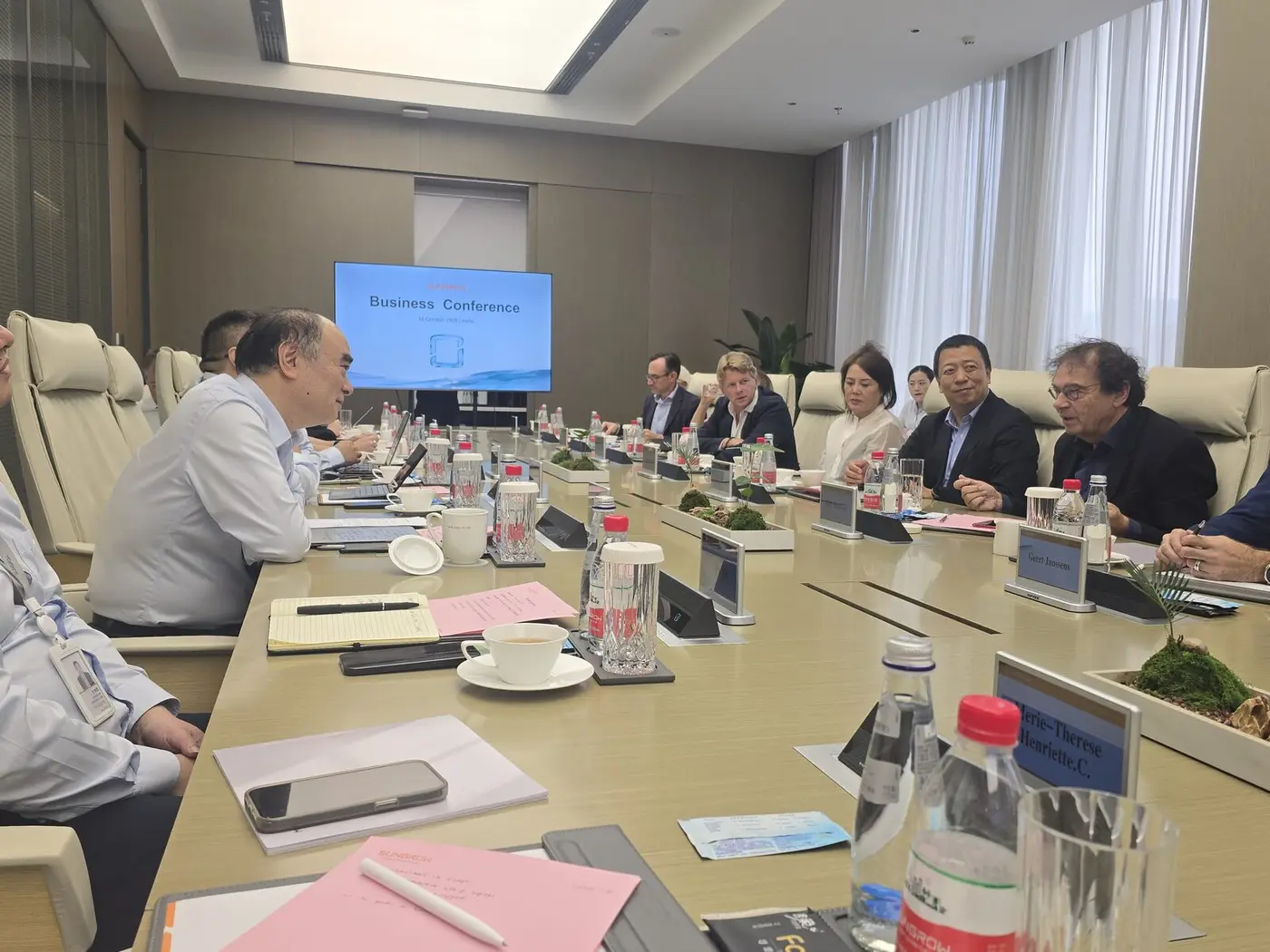
Jun Jiang sits at the table and translates intent, not only words: what you ask, how your partner hears it, and the other way round.
Technology and investment cooperation
Licensing, joint development, joint ventures and investment: we bring the right parties together and help both sides understand the terms.
Access to networks and decision-makers
Business leaders, industry associations, innovation zones and local governments. Through Jun's own network and our partner UNIDO ITPO Beijing.
What it gives you
Time, certainty
and the right people
Saving time
No months of searching platforms and trade fairs. You start with a well-founded shortlist and a plan of approach.
Limiting risk
Due diligence, factory visits and samples from two suppliers. You know who you are working with before you commit.
The right contacts
You talk to the people who decide, prepared, and with someone at your side who knows both sides of the table.
Exporting, sourcing, manufacturing, partnering or investing: in a first conversation we look at what is realistic, what it takes and where the biggest risk lies.
Discover your opportunities in China→Method
From a question
to an approved sample
This is how a typical production or sourcing project runs. For market access, technology or investment we adapt the steps.
- 01
Market study
Desk research, technical comparison and observation on the ground. We walk the trade fairs and look at the stands, the reception and how a company explains its engineering, because that tells you a lot about what it is like to work with.
Output A written analysis with sources.
- 02
Plan of approach
Strategic options with their risks and a recommendation, and a phased roadmap over 0–6, 6–12, 12–24 and 24+ months.
Output A decision document for your board.
- 03
Shortlist of 3 to 5 companies
Each candidate gets a profile, its compatibility with your company, explicit strengths and weaknesses, and the risks we would not accept on your behalf. We rank them and say why.
Output A shortlist with a contact at every company.
- 04
Company visit in China
You travel to China and meet the candidates. The first real read on a factory happens on the floor: the machine park, the stock, whose product is running on the line that day. Jun travels with you and sits at the table.
Output A choice between two or three real candidates.
- 05
Sample evaluation
Always at two suppliers in parallel: a stock sample, a sample to your specification and a pre-production sample from the actual batch. The last one becomes the golden sample every quality check is measured against.
Output A golden sample and a specification in millimetres, Pantone and percentages.
- 06
Translating how you work
Your quality manual, your way of escalating, your expectations about response times: all of it has to be restated in a form a Chinese partner can act on. And the other way round, we explain how your partner works.
Output A working relationship instead of a purchase order.
The shortlist
This is what a shortlist looks like
Per candidate: how well they fit your company, what they do well and what to watch out for. Not a list of twenty PDF suppliers, but three to five companies we have looked at ourselves.
Example, anonymised. Based on a supplier study for a Belgian manufacturer, May 2026. Scores for illustration.
Packaging line · 3 candidates
- A
Recommended
86+ Full line integration, own control software, references at two European multinationals
− Documentation in Chinese only; no service point in Europe
- B
Strong alternative
74+ Fast delivery, flexible on small first orders
− CE file not yet complete; dependent on one engineer
- C
Budget
61+ Lowest price, solid mechanics
− Trading company, not a factory: verify
Mutual understanding
We translate the European
way of working into the
Chinese one, and back.
Most misunderstandings are not about language but about intent. Four examples from practice.
You say
Send us a quote first, then we will compare.
Your partner hears
There is no relationship yet. The price will reflect that.
What works
First a visit or a video call with the decision-maker, then the price.
Your partner says
没问题 · no problem
What it often means
I heard you and I will do my best.
What works
Confirm in WeChat, with the specification and a date.
You do
Raise a problem openly in the meeting.
Your partner experiences
A loss of face in front of everyone.
What works
Escalate in writing and in private, never in the room.
You think
The contract is the end of the negotiation.
Your partner thinks
The contract is the start of the relationship.
What works
Plan the first year of follow-up: visits, Chinese New Year, milestones.
Due diligence
What we check
before you commit
- Business licence in pinyin and characters, checked against the Chinese company register
- Factory (工厂) or trading company (贸易公司): asked directly, verified independently
- An independent factory inspection through SGS, BV or QIMA
- Bank account in the company's own name
- At least three references from your market, which we actually call
- Register your trademark with CNIPA before you send specifications for samples
What people underestimate
Your FOB price is often only part of what you will actually pay.
Freight, insurance, duty, VAT, customs clearance, last mile, inspection and the defect margin. We model it before you negotiate. The real room for negotiation is rarely in the unit price, but in minimum order quantity, payment terms and replacement of defective units.
Why China Connect?
Mutual understanding
In-depth knowledge of both Chinese and European business culture and economic environment. We know how each side thinks, decides and works together.
The right network
Access to relevant companies, sectors, organisations and decision-makers, in China and in Europe. Built over almost forty years, not at a single trade fair.
From contact to cooperation
Not only arranging meetings, but guiding both parties towards concrete business opportunities and long-term cooperation.
Business in China
Discover your business
opportunities in China.
Exporting, sourcing, manufacturing, partnering or investing: in a first conversation we look at what is realistic, what it takes and where the biggest risk lies.